
Living in New York City means dealing with air quality challenges that most Americans never face. Between traffic exhaust, construction dust, wildfire smoke drifting from thousands of miles away, and the unique problems of aging building systems, the air inside your apartment can be 2-5 times more polluted than the air outside — even in a city with notoriously bad outdoor air.
The good news? Your HVAC system, combined with the right strategies, can dramatically improve the air you breathe at home. Here’s what NYC residents need to know about indoor air quality and how to make it better.
Why Indoor Air Quality Matters More in NYC
New York City’s air quality challenges are uniquely intense. The combination of density, traffic, construction, aging buildings, and extreme seasonal changes creates conditions found in few other American cities.
What’s Actually in NYC Air
PM2.5 (Fine Particulate Matter):
These microscopic particles — 2.5 micrometers or smaller — are the most dangerous air pollutants because they penetrate deep into your lungs and even enter your bloodstream. NYC sources include vehicle exhaust, building boilers, construction, and cooking. According to NYC Health, PM2.5 contributes to approximately 1 in 25 deaths in the city annually.
Traffic-Related Pollution:
If you live near a major road, bus route, or highway, you’re exposed to elevated levels of nitrogen dioxide, carbon monoxide, and particulate matter. Morning and evening rush hours create spikes that can infiltrate apartments, especially those with windows facing busy streets.
Construction Dust:
In a city with perpetual construction, dust from demolition and building work contains silica, heavy metals, and sometimes lead from older structures. If you live near a construction site, this becomes a daily air quality challenge.
Wildfire Smoke:
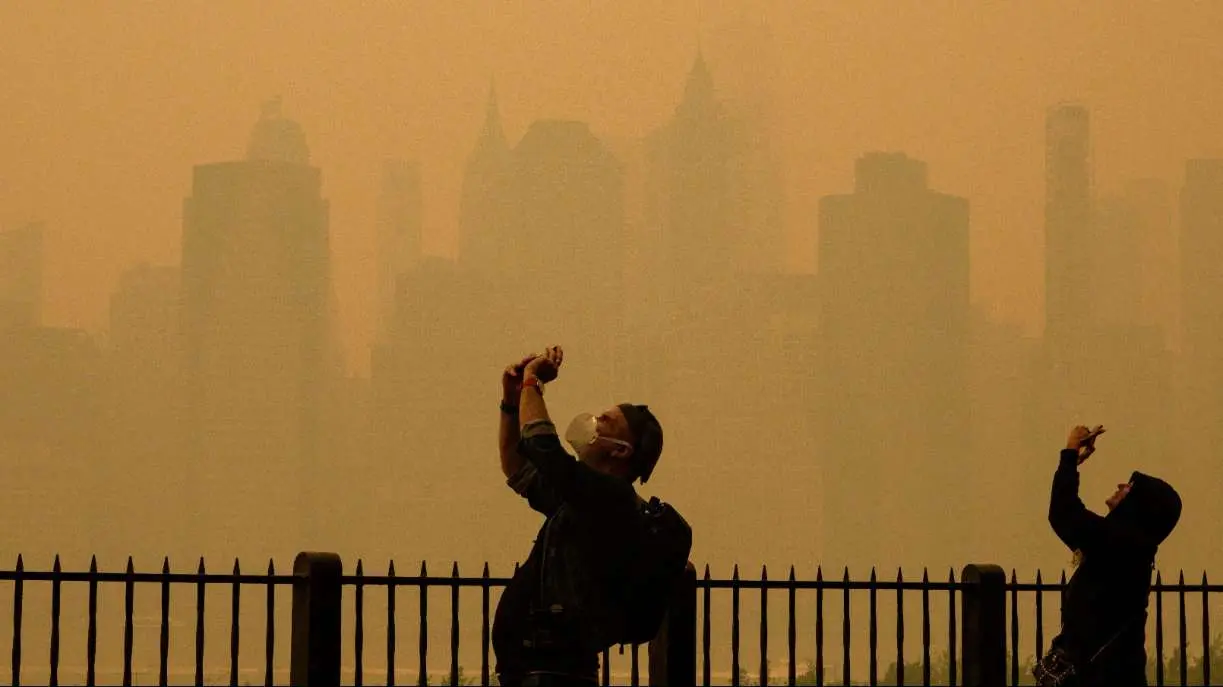
The June 2023 Canadian wildfire smoke event wasn’t a one-time occurrence. NYC experienced some of the worst air quality ever recorded, and indoor air quality readings were 15 times higher than what’s considered safe — even inside apartments. Future wildfire seasons will likely bring similar events.
The Seasonal Air Quality Challenge
NYC apartments face dramatically different air quality challenges depending on the season — and your HVAC system plays a central role in all of them.
Winter: The Dry Air Problem
Approximately 80% of NYC’s large multifamily buildings use steam heating systems. These systems were designed over a century ago to work with windows open — which means they typically overheat apartments in winter.
The problem:
-
Steam heat dries air dramatically — NYC apartments commonly drop to 10-20% relative humidity in winter
-
Studies show NYC apartments often remain below safe humidity levels (30%+) for 3+ months each winter
-
Research indicates larger buildings (100+ units) tend to be even drier than smaller buildings
-
Dry air causes dry skin, nosebleeds, sore throats, increased susceptibility to respiratory infections, and damage to wood furniture and floors
What helps:
-
Portable humidifiers — but they require weekly cleaning to prevent mold and bacteria growth
-
Target 30-50% relative humidity (use a $10-$20 hygrometer to monitor)
-
Placing a bowl of water on your radiator adds some moisture, but not enough for most apartments
-
Whole-home humidifiers can be installed with forced-air systems, but not with steam radiators
Summer: Humidity and Allergens
NYC summers bring the opposite problem: humidity levels that can exceed 70-80%, creating perfect conditions for mold growth, dust mites, and musty odors.
The problem:
-
High humidity promotes mold growth, especially in bathrooms, closets, and areas with poor ventilation
-
Dust mites thrive above 50% humidity
-
Older NYC buildings often lack adequate ventilation, trapping moisture
-
Window AC units can help dehumidify, but only in the room where they’re installed
What helps:
-
Run your AC regularly — it removes humidity as well as cooling
-
Use bathroom exhaust fans during and after showers
-
Consider a standalone dehumidifier for problem areas
-
Target 30-50% relative humidity (the same as winter, but approached from the other direction)
Understanding HVAC Filters: MERV Ratings Explained
If you have any kind of forced-air system — whether it’s central air, a PTAC unit, or a mini-split with a filter — your filter is your first line of defense against airborne particles.
What MERV Means
MERV stands for Minimum Efficiency Reporting Value. It’s a scale from 1-20 that measures how effectively a filter captures particles of different sizes. Higher numbers = smaller particles captured.
MERV Rating Guide for NYC Apartments:
MERV 8 (Basic residential):
-
Captures: dust, pollen, dust mites, mold spores
-
Captures 70%+ of particles 3-10 microns
-
Best for: homes without specific air quality concerns
MERV 11 (Better residential):
-
Captures everything MERV 8 does, plus pet dander, auto emissions, fine dust
-
Captures 85%+ of particles 3-10 microns
-
Best for: homes with pets, mild allergies, or urban locations with higher pollution
-
Symptom reduction of 60-80% reported when upgrading from MERV 8
MERV 13 (Superior residential):
-
Captures everything MERV 11 does, plus bacteria, tobacco smoke, cooking smoke, most virus-carrying droplets
-
Captures 90%+ of particles 3-10 microns, 50%+ of particles 0.3-1.0 microns
-
Best for: asthma, severe allergies, immunocompromised individuals, wildfire smoke protection
-
This is what hospitals use in general patient areas
Important Caution: System Compatibility
Higher MERV filters create more air resistance. Not every HVAC system can handle MERV 13 — especially older systems. Using a filter that’s too restrictive can reduce airflow, strain your blower motor, and increase energy costs by 5-10%.
Before upgrading:
-
Check your system’s manual for maximum recommended MERV rating
-
Most systems built after 2000 can handle MERV 11; MERV 13 requires verification
-
When in doubt, ask your HVAC technician
Portable Air Purifiers: When HVAC Filters Aren’t Enough
Many NYC apartments don’t have forced-air systems at all — just steam radiators and maybe a window AC. In these cases, portable air purifiers become essential for clean air.
What to Look For
HEPA Filtration:
True HEPA filters capture 99.97% of particles 0.3 microns and larger — far better than any HVAC filter. Look for “True HEPA” or “H13 HEPA” designation. Avoid “HEPA-type” or “HEPA-like” which don’t meet the standard.
CADR (Clean Air Delivery Rate):
CADR measures how many cubic feet of air the purifier can clean per minute. Match the CADR to your room size — a purifier rated for 200 sq ft won’t adequately clean a 400 sq ft living room.
Activated Carbon:
HEPA filters capture particles but not gases and odors. Activated carbon filters absorb VOCs (volatile organic compounds), cooking odors, and chemical off-gassing from furniture and cleaning products.
What to Avoid
Ozone Generators and Ionizers:
Some air cleaners produce ozone as a byproduct or use ionization. The New York State Department of Health warns that ozone can aggravate asthma and cause respiratory symptoms. Ionizers can produce harmful byproducts like formaldehyde and ultrafine particles. Stick with mechanical filtration (HEPA).
Placement Tips
-
Place purifiers in rooms where you spend the most time — bedroom first, then living areas
-
Keep purifiers away from walls and corners for optimal airflow
-
Run continuously on lower settings rather than high speed intermittently
-
Replace HEPA filters according to manufacturer schedule (usually 6-12 months)
Kitchen Ventilation: A Major NYC Air Quality Factor
Cooking is one of the biggest sources of indoor air pollution — and many NYC apartments have inadequate kitchen ventilation.
Gas Stoves: A Special Concern
Gas stoves produce nitrogen dioxide (NO2) and carbon monoxide (CO) as byproducts of combustion. Studies have linked gas stove use to increased asthma risk, particularly in children. During poor outdoor air quality days, using a gas stove without ventilation can significantly worsen indoor air quality.
What helps:
-
Always use your range hood exhaust fan while cooking — and for 10-15 minutes after
-
If your range hood doesn’t vent outside (many NYC hoods just recirculate), open a window slightly
-
Consider an induction cooktop if you’re renovating — no combustion, no NO2
-
Place a portable air purifier in or near the kitchen
Electric Cooking
Electric stoves don’t produce combustion byproducts, but all cooking generates particles from food, oil, and smoke. Ventilation is still important, especially for high-heat cooking like frying or searing.
Protecting Your Apartment During Poor Air Quality Events
Whether it’s wildfire smoke, construction dust, or a high-pollution day, knowing how to seal your apartment quickly can make a significant difference.
Immediate Steps:
-
Close all windows and doors — even small gaps matter
-
Seal gaps under doors with towels or door draft stoppers
-
Check window AC units — make sure they’re sealed tightly where they meet the window frame
-
Run AC in recirculation mode (not “fresh air” mode) so it doesn’t draw in outside air
-
Run air purifiers continuously in occupied rooms
DIY Emergency Air Filter
During events like the 2023 wildfire smoke crisis, air purifiers sold out across the city. You can create an effective temporary air filter using a box fan and MERV-13 furnace filters:
-
Tape four 20×20″ MERV-13 filters to a 20″ box fan in a cube shape
-
Point filters inward, fan pulling air through
-
This “Corsi-Rosenthal Box” was developed by engineers and provides effective filtration in emergencies
Monitoring Air Quality
Check NYC’s air quality before opening windows or spending time outside:
-
AirNow.gov — official EPA readings and forecasts
-
NYC Health real-time monitors — street-level readings (more accurate for what you’ll actually breathe)
-
AQI below 50 = good, 50-100 = moderate, above 100 = unhealthy for sensitive groups, above 150 = unhealthy for everyone
Reducing Indoor Pollution Sources
Filtration helps, but reducing pollution at the source is even more effective.
Common Indoor Pollutants and Solutions:
Cleaning Products:
Many conventional cleaners release VOCs. Switch to fragrance-free, low-VOC options. Avoid aerosol sprays when possible.
Candles and Incense:
Both release particles and can significantly worsen indoor air quality. If you use them, ventilate well and don’t burn them in closed rooms.
Furniture and Flooring:
New furniture, especially pressed wood products, can off-gas formaldehyde. When possible, buy solid wood or look for low-formaldehyde products. Increase ventilation after installing new furniture or flooring.
Smoking and Vaping:
Both tobacco and cannabis smoke significantly impact indoor air quality, and secondhand smoke is a serious health hazard. If you smoke, do it outside and change clothes before extended contact with children.
HVAC-Integrated Air Quality Solutions
For those with ducted HVAC systems, several add-ons can improve air quality building-wide.
UV-C Germicidal Lights
Installed in your ductwork near the evaporator coil, UV-C lights kill bacteria, viruses, and mold as air passes through. They’re particularly effective at preventing mold growth on AC coils — a common source of musty smells and allergens.
Cost: $400-$800 installed. Bulbs need replacement annually ($50-$100).
Whole-Home Air Purifiers
These install in your ductwork and purify air as it circulates through your HVAC system. Since air passes through your HVAC system multiple times per hour, whole-home purifiers can clean more air than portable units.
Cost: $500-$1,500 installed, depending on technology (electronic air cleaners, media filters, or photocatalytic systems).
ERV/HRV Systems (Energy/Heat Recovery Ventilators)
These bring in fresh outdoor air while recovering heat (winter) or cooling (summer) from the exhaust air. They solve the ventilation dilemma of older buildings: how to get fresh air without wasting energy. ERVs also help balance humidity.
Cost: $1,500-$4,000 installed. Best suited for larger apartments or those with specific ventilation needs.
Plants: Do They Actually Help?
You’ve probably heard that houseplants clean the air. The reality is more complicated.
The famous 1989 NASA study showed plants could remove some VOCs in sealed chambers. However, follow-up research found that in real-world conditions, you’d need hundreds of plants to meaningfully impact air quality in a typical room. The air exchange rate in most buildings overwhelms any filtering effect from plants.
That said, plants do add humidity (helpful in dry NYC winters) and have psychological benefits. Just don’t rely on them as your air purification strategy.
Final Thoughts
Clean air isn’t a luxury in NYC — it’s a health necessity. Between outdoor pollution, wildfire smoke events, and the unique challenges of older buildings, New Yorkers need to be proactive about the air they breathe indoors.
Start with the basics: change your HVAC filters regularly and consider upgrading to MERV 11 or 13. Add a HEPA air purifier for bedrooms and living spaces. Control humidity in both summer and winter. Ventilate when cooking. And monitor outdoor air quality so you know when to seal up and when it’s safe to open windows.
The air in your apartment doesn’t have to reflect the air outside. With the right approach, you can create a healthy breathing space in the middle of the most densely populated city in America.
🌬️ Breathe easier — your lungs will thank you.