
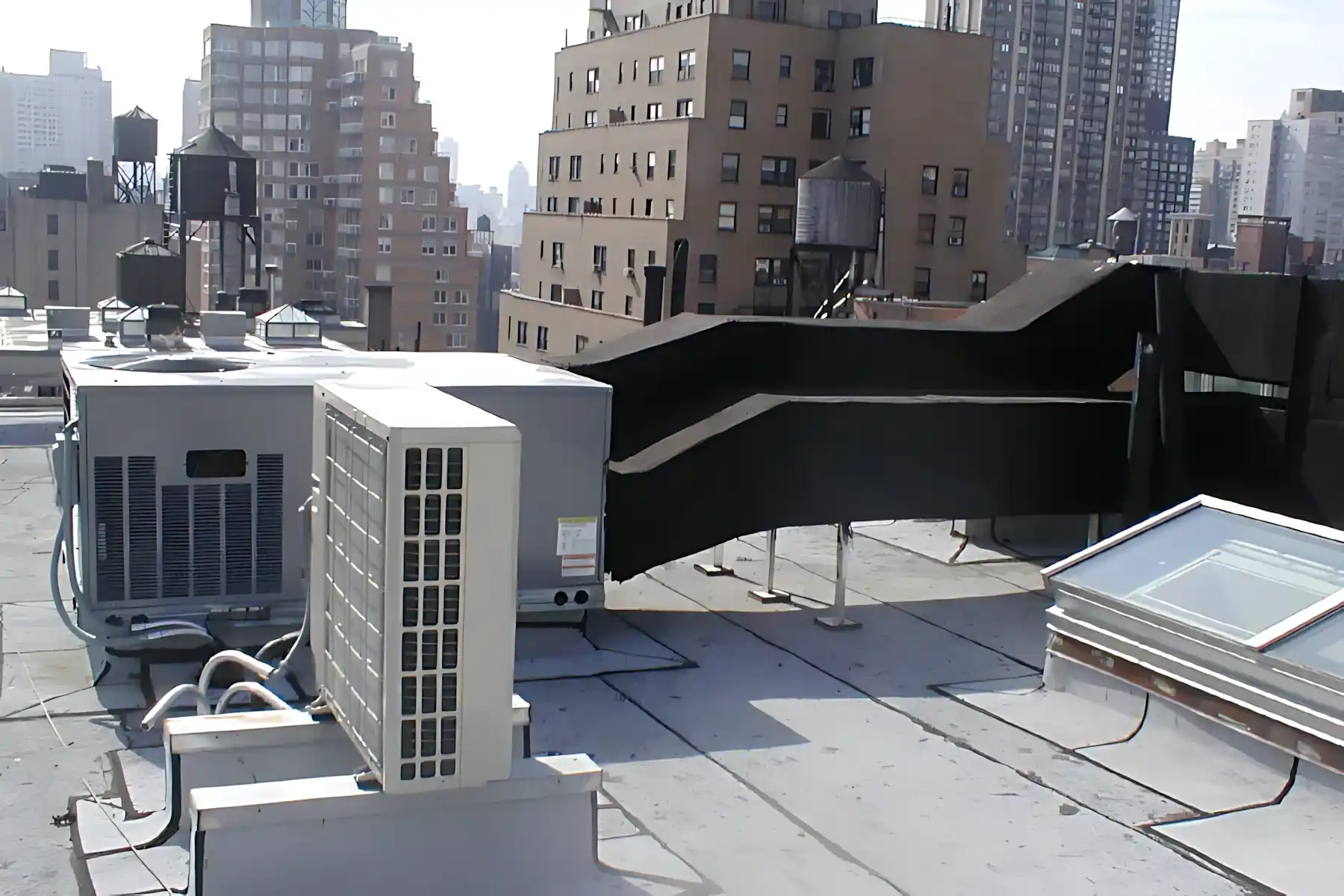
Choosing the right HVAC system for a New York City apartment is more complicated than simply picking a brand or price point. Between strict building regulations, unique architectural constraints of pre-war and high-rise buildings, and the city’s extreme seasonal temperature swings, making the wrong choice can mean years of discomfort, wasted money, and frustrating repairs.
Whether you’re replacing an aging window unit, upgrading from unreliable steam heat, or installing climate control in a newly purchased co-op, this guide covers everything you need to know to make an informed decision.
Why NYC Apartments Need Special HVAC Consideration
New York City apartments are unlike homes anywhere else in the country. Most were built before central air conditioning existed. Pre-war buildings — constructed before 1940 — dominate neighborhoods from the Upper West Side to Brooklyn Heights, and they come with their own set of challenges.
What makes NYC apartments different:
-
No existing ductwork. The vast majority of NYC residential buildings were designed without space for air ducts. Retrofitting ductwork requires opening walls and ceilings — often impossible in occupied buildings and prohibitively expensive even during gut renovations.
-
Limited electrical capacity. Older buildings often have outdated electrical systems that can’t support high-draw equipment without expensive panel upgrades.
-
Strict building rules. Co-op and condo boards regulate everything from where outdoor units can be placed to what hours contractors can work.
-
Extreme weather demands. NYC experiences hot, humid summers that push air conditioning to its limits and cold winters that require reliable heating — often from the same system.
Understanding these constraints is the first step toward choosing equipment that will actually work in your space — not just on paper, but in practice.
Step One: Assess Your Building’s Rules and Limitations
Before researching equipment or getting quotes, you need to understand what your building actually allows. This step is critical — many NYC residents have purchased HVAC systems only to discover their building won’t permit installation.
Questions to answer before you start:
-
Where can outdoor units be placed? Mini-splits and central systems require an outdoor condenser. Some buildings allow balcony or rooftop installation; others prohibit any exterior equipment on the façade.
-
Are exterior wall penetrations allowed? Ductless mini-splits require a small hole (typically 3 inches) through an exterior wall for refrigerant lines. Some co-ops and landmarked buildings don’t permit this.
-
What electrical upgrades are permitted? Installing a heat pump system may require upgrading your apartment’s electrical service — and some older buildings can’t support additional load on shared infrastructure.
-
Does your building have PTAC sleeves? Many post-war buildings were constructed with through-wall sleeves specifically for PTAC units — making replacement straightforward.
Contact your building’s management office or review your co-op’s alteration agreement before making any decisions. In co-ops, you’ll likely need board approval for any HVAC installation, which requires submitting architectural plans, contractor insurance documentation, and sometimes a formal interview.
As of January 2026, NYC Department of Buildings rules require co-op and condo boards to formally attest they’ve reviewed renovation plans before DOB permit filing can begin — adding another layer to the approval process.
Understanding Your HVAC Options
NYC apartments typically have four main HVAC options, each with distinct advantages and limitations. The right choice depends on your building’s infrastructure, your budget, and your comfort priorities.
Window Air Conditioners
Window units remain the most common cooling solution in NYC for one reason: they’re cheap and require no building approval in most cases. You can buy a unit at a hardware store and install it the same day.
Best for: Renters, budget-conscious owners, single-room cooling
Typical cost: $150–$600 per unit
Capacity range: 5,000–18,000 BTU
Drawbacks:
-
Noisy operation — often 50+ decibels
-
Blocks window views and natural light
-
Cooling only — no heating capability
-
Some landmarked buildings prohibit visible façade equipment
PTAC Units (Packaged Terminal Air Conditioners)
PTACs are the self-contained units you see in hotel rooms and many post-war NYC apartment buildings. They sit along the wall beneath a window and provide both heating and cooling through a single unit vented to the outside.
Best for: Buildings with existing PTAC sleeves, individual room control
Typical cost: $400–$1,200 per unit (plus installation if replacing)
Capacity range: 7,000–15,000 BTU
Advantages:
-
Heating and cooling in one unit
-
Simple replacement if building already has sleeves
-
Individual room temperature control
Drawbacks:
-
Lower efficiency compared to modern heat pumps
-
Interrupt the building envelope, causing heat loss in winter and heat gain in summer
-
PTAC-related water damage is among the most common apartment insurance claims in NYC
Ductless Mini-Split Systems
Mini-splits have become the go-to solution for NYC apartments without ductwork. They consist of an outdoor compressor connected to one or more indoor air handlers via refrigerant lines that pass through a small hole in the wall.
Best for: Pre-war buildings, renovations, whole-apartment heating and cooling, noise-sensitive residents
Typical cost: $3,000–$8,000 for single-zone; $8,000–$15,000+ for multi-zone systems (including installation)
Advantages:
-
Whisper-quiet operation — indoor units often run under 30 decibels
-
High efficiency — modern units achieve SEER ratings of 20+ and work effectively in temperatures as low as -13°F
-
Zone control — set different temperatures in different rooms
-
Heating and cooling from one system — can replace or supplement unreliable steam heat
-
Minimal construction required
Drawbacks:
-
Higher upfront cost than window units or PTACs
-
Requires outdoor condenser placement — may need board approval and roof/balcony access
For buildings that don’t allow wall-mounted indoor units, ceiling cassette options can be recessed between floor joists for a lower-profile appearance — though this adds installation complexity and cost.
Central Air Conditioning (Ducted Systems)
Central air is rare in NYC apartments because it requires extensive ductwork running above ceilings and behind walls. It’s typically only practical during gut renovations or apartment combinations where walls are already being opened.
Best for: Gut renovations, large apartments, owners who want invisible climate control
Typical cost: $15,000–$30,000+ (including ductwork installation)
Requirements:
-
Ceilings at least 9 feet high to accommodate soffits for ductwork
-
Mechanical closet or pantry space for the air handler
-
Full board approval and DOB permits
If your building allows it and you’re already doing a major renovation, central air delivers the most seamless result — with no visible equipment inside your living spaces.
Sizing Your System: Why BTU Calculations Matter
Choosing the right capacity is just as important as choosing the right type of system. An undersized unit will run constantly without reaching comfortable temperatures. An oversized unit will cycle on and off rapidly, failing to properly dehumidify the air and creating a clammy, uncomfortable environment.
General BTU guidelines by room size:
-
150–250 sq ft: 5,000–6,000 BTU
-
250–350 sq ft: 7,000–8,000 BTU
-
350–450 sq ft: 9,000–10,000 BTU
-
450–550 sq ft: 12,000 BTU
-
550–700 sq ft: 14,000 BTU
Factors that increase BTU requirements:
-
High ceilings: Add approximately 1,000 BTU per foot above 8 feet
-
Sun exposure: South and west-facing rooms may need 10% more capacity
-
Kitchens: Add 4,000 BTU for heat from cooking appliances
-
Occupancy: Add 600 BTU per person beyond two regular occupants
A professional load calculation — called a Manual J calculation — accounts for all these variables plus insulation quality, window types, and air infiltration. This is the most accurate way to size equipment.
Energy Efficiency: What the Ratings Mean
NYC has some of the highest electricity rates in the country, making efficiency a major consideration. More efficient equipment costs more upfront but saves money every month it operates.
Key efficiency ratings:
-
SEER (Seasonal Energy Efficiency Ratio): Measures cooling efficiency. Higher is better. Look for SEER 16 or above; premium units reach SEER 20+.
-
HSPF (Heating Seasonal Performance Factor): Measures heat pump heating efficiency. Look for HSPF 9 or higher for cold-climate performance.
-
EER (Energy Efficiency Ratio): Measures efficiency at peak conditions (95°F outside). Important for NYC summers. Look for EER 11+.
ENERGY STAR-certified equipment meets EPA efficiency standards and typically uses 10-15% less energy than non-certified models.
Inverter-driven compressors — standard on most modern mini-splits — adjust output to match demand rather than cycling fully on and off. This improves both efficiency and comfort while reducing noise.
The NYC Approval Process: What to Expect
If you live in a co-op or condo, installing HVAC equipment requires approval from your building’s board — even if your building already has similar systems in other units.
Typical documentation required:
-
Architect-stamped drawings showing equipment placement and refrigerant line routing
-
Scope of work document detailing all modifications
-
Contractor license and insurance certificates (general liability plus workers’ compensation)
-
Load letter from a licensed electrical engineer confirming your panel can handle the new equipment
-
Noise mitigation plan for condenser placement
Board review typically takes 2-4 weeks after submission of a complete package. The board’s architect or engineer may request revisions, adding additional review cycles.
For work involving electrical, plumbing, or HVAC systems, you’ll also need a permit from the NYC Department of Buildings. This requires professional filing and can take 2-8 weeks depending on project scope.
Local Law 97: How NYC’s Climate Law Affects Your Decision
If you own property in a building larger than 25,000 square feet, Local Law 97 should factor into your HVAC decision. This landmark legislation places carbon emission caps on large buildings, with penalties of $268 per ton of CO2 equivalent over the limit.
Key points for building owners:
-
The first compliance period began in 2024, with stricter limits coming in 2030
-
Buildings account for roughly 70% of NYC’s total greenhouse gas emissions
-
Switching from oil or gas heating to efficient electric heat pumps can significantly reduce building emissions
-
A “Beneficial Electrification Credit” rewards buildings that install high-efficiency heat pump systems before 2030
Even if your building isn’t currently subject to Local Law 97, choosing efficient electric equipment now positions you for increasingly strict energy regulations in the future.
Noise Considerations: Living With Your HVAC System
In a city where walls are thin and neighbors are close, noise matters. Different HVAC systems produce dramatically different sound levels.
Typical noise levels by system type:
-
Window AC: 50-60 decibels (comparable to normal conversation)
-
PTAC: 45-55 decibels
-
Mini-split indoor unit: 19-32 decibels (whisper to quiet library)
-
Central air: 25-35 decibels indoors
Outdoor condenser noise is also a factor — both for your own comfort if placed on a balcony and for neighbor relations. Many co-op boards require noise studies before approving condenser placement.
Installation quality significantly affects real-world noise. Proper mounting with vibration isolation, correct sizing, and clean airflow pathways all reduce operational noise.
Choosing an HVAC Contractor in NYC
Installation quality often matters more than equipment choice. A poorly installed premium system will underperform a properly installed mid-range unit.
What to look for:
-
Experience with NYC buildings. A contractor who works regularly in co-ops and condos understands board requirements, building logistics, and common obstacles.
-
Proper licensing and insurance. NYC requires specific licenses for HVAC work. Verify current workers’ compensation and liability coverage.
-
Load calculation expertise. A contractor should perform a proper sizing calculation — not just match what was there before.
-
Clear warranty terms. Understand what’s covered for both equipment and labor.
Get multiple quotes, but don’t choose solely on price. The cheapest bid often means corners will be cut on installation quality or equipment selection.
Cost Comparison: What to Budget
HVAC costs in NYC run higher than national averages due to labor costs, building logistics, and permit requirements.
Typical installed costs (2026 estimates):
-
Window AC: $200–$800 (unit plus basic installation)
-
PTAC replacement: $1,500–$3,000 per unit
-
Single-zone mini-split: $4,000–$8,000
-
Multi-zone mini-split (3-4 zones): $12,000–$20,000
Add 10-20% for buildings with difficult access, rooftop condenser placement, or complex board requirements that extend project timelines.
Final Thoughts
Choosing the right HVAC system for your NYC apartment requires balancing building constraints, performance needs, budget, and long-term efficiency. There’s no single “best” solution — only the best solution for your specific situation.
Start by understanding what your building allows. Then match system options to your space requirements and comfort priorities. Work with a contractor who knows NYC buildings and can guide you through the approval process.
The upfront effort pays off in years of reliable comfort — through humid summers, freezing winters, and everything in between.
❄️ Stay comfortable all year — with a system that actually works for your NYC home.